
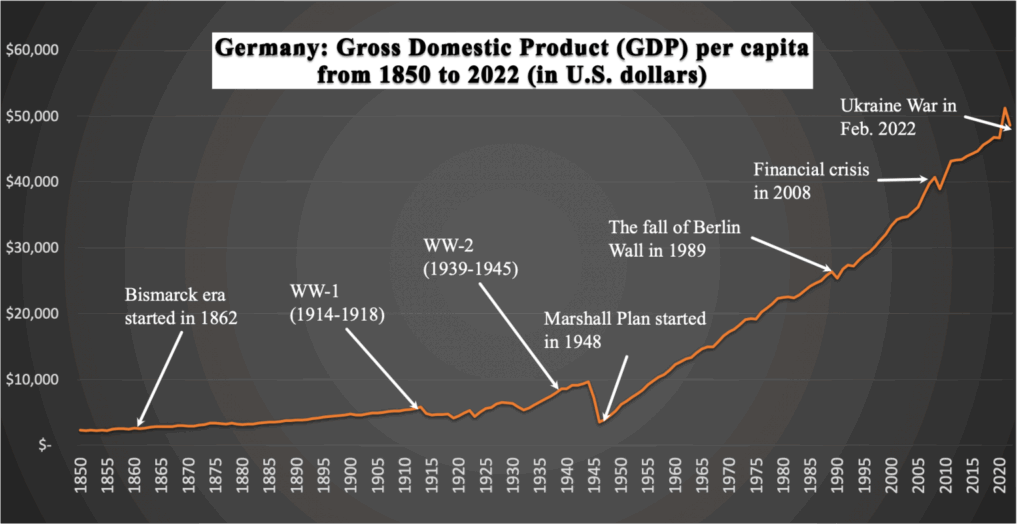
The Germany Economic Program is facing increasing scrutiny as Chancellor Friedrich Merz’s ambitious plan to revitalize the country’s stagnant economy struggles to gain traction. While the program initially promised extensive fiscal stimulus to address economic stagnation in Germany, many economists now question its effectiveness. Critics argue that the anticipated reforms have not materialized, resulting in a slowdown of growth and decreased private investment levels reminiscent of the 1995 era. The CDU Chancellor’s approach, seen as a revival of past strategies, has so far yielded minimal changes, notably a modest pension reform with no significant adjustments to retirement age. As updates on the German economy continue to unfold, the effectiveness of Merz’s proposals remains a pivotal topic in shaping Germany’s fiscal landscape.
The economic initiative in Germany led by Chancellor Friedrich Merz has become a focal point of discussion as it seeks to combat the nation’s ongoing fiscal challenges. This strategy, which was expected to rejuvenate the country through substantial investments and a re-evaluation of spending policies, now faces substantial hurdles. As the country navigates through a phase marked by economic lull, many await indications of how these potential reforms will unfold. With a backdrop of sluggish consumer demand and heightened concerns about industry layoffs, the CDU-led government’s measures must prove more than just promises. In the context of recent updates regarding the German economy, the path forward will be critical in determining the effectiveness of legislative changes outlined under Merz’s leadership.
The Challenges of Friedrich Merz’s Economic Reforms
Friedrich Merz’s tenure as Chancellor has faced significant skepticism from economists amid a backdrop of economic stagnation in Germany. Critics argue that while the announcement of a historic off-budget fund of €500 billion aimed at infrastructure and climate initiatives sparked initial optimism, the impact has not lived up to expectations. Analysts point out that the lack of substantial reforms has rendered this fiscal stimulus largely ineffective, as the country grapples with sluggish growth rates and declining private investment.
The fallout from the initial euphoria surrounding the €500 billion investment package raises questions about the feasibility of Merz’s proposed reforms. Despite the promise of a dynamic shift akin to the 2003 reforms under Gerhard Schröder, the reality has been quite different. This disconnect between aggressive fiscal initiatives and concrete outcomes highlights the challenges faced by the CDU government in implementing effective policies.
Frequently Asked Questions
What is the Germany Economic Program under Chancellor Friedrich Merz?
The Germany Economic Program, led by Chancellor Friedrich Merz, aims to revitalize the economy through significant reforms and fiscal stimulus, including a €500 billion off-budget fund designed to enhance infrastructure and climate initiatives.
How has the Germany Economic Program responded to economic stagnation in Germany?
Despite the ambitious goals of the Germany Economic Program, skepticism remains as the economy has not rebounded from stagnation, with sluggish growth and low private investment, reflecting challenges in implementing effective reforms.
What were the key initiatives proposed in Friedrich Merz’s reforms?
Friedrich Merz’s reforms under the Germany Economic Program include the historic establishment of a €500 billion infrastructure fund and lifting financing constraints for defense spending, aimed at modernizing the German economy.
How does the Germany fiscal stimulus relate to current economic challenges?
The Germany fiscal stimulus, part of Chancellor Merz’s economic strategy, seeks to address ongoing economic challenges by encouraging investment and consumption, but its effectiveness is under scrutiny as results remain limited.
What updates are available regarding the German economy and Merz’s economic policies?
Recent updates on the German economy indicate that despite the initial optimism surrounding Merz’s economic policies, key indicators like consumption and investment have not improved significantly, leading to ongoing concerns among economists.
Why is the Germany Economic Program facing criticism from economists?
Economists criticize the Germany Economic Program for its slow implementation of promised reforms, notably a minimal pension reform without substantive changes, which has failed to catalyze significant economic recovery.
What impact did the promises of the Germany Economic Program have on public expectations?
The ambitious promises of the Germany Economic Program initially raised public expectations for economic growth and modernization; however, the subsequent lack of progress has led to disappointment and skepticism.
What historical context influenced the Germany Economic Program’s formation?
The Germany Economic Program drew inspiration from past reforms like the 2003 ‘Agenda 2010,’ which successfully lifted Germany out of economic difficulties, motivating current policymakers to adopt a bold fiscal approach to stimulate growth.
| Key Points | Details |
|---|---|
| Economic Challenges | Germany is facing stagnation with sluggish growth and high unemployment. |
| Leadership | Chancellor Friedrich Merz struggles to implement effective reforms. |
| Initial Hopes | A €500 billion fund for infrastructure and climate was announced to stimulate the economy. |
| Current Situation | Growth remains stagnant, private investment is at 1995 levels, and layoffs are common. |
| Reform Outcomes | The promised reforms have yielded minimal results, primarily focused on pension reforms. |
Summary
The Germany Economic Program, introduced by Chancellor Friedrich Merz, faces significant criticism amid disappointing economic performance. Initially hailed as a transformative initiative aimed at revitalizing the economy with substantial investments, the program has struggled to deliver tangible results, leaving many Germans skeptical about the effectiveness of the proposed reforms. Despite the ambitious plans, growth remains stagnant, and fears of prolonged economic challenges loom large over the nation.