
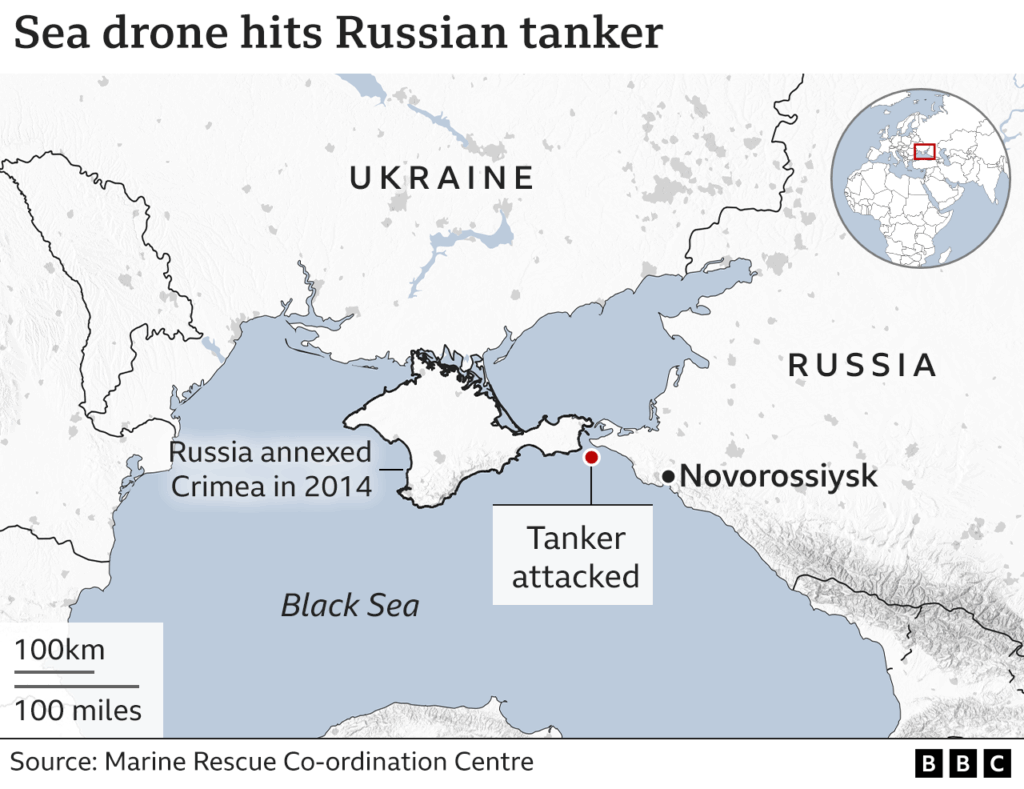
The recent surge in Russian tanker attacks in the Black Sea has escalated tensions in a region already fraught with complexities. Just days after two vessels were hit, a third Russian tanker, loaded with sunflower oil and en route to Georgia, faced a similar fate, prompting serious concerns over maritime security in the Black Sea. Turkish officials confirmed the attack, which occurred 80 nautical miles off their coast, underscoring the growing risks that shipping incidents pose to regional trade. With Ukrainian drone strikes claiming responsibility for these attacks, the implications for shipping routes and oil transport safety are substantial. As these events unfold, the world watches closely, questioning how this escalation will affect commercial and strategic interests in the region.
In the ongoing conflict surrounding the Black Sea, recent hostilities have targeted maritime vessels, particularly highlighting the assault on Russian tankers engaged in trade. The series of confrontations, driven by Ukrainian drone operations, marks a significant shift in the naval landscape as maritime security becomes an increasingly urgent priority in these waters. As the attacks on vessels carrying essential goods such as sunflower oil unfold, concerns grow regarding Turkey shipping incidents and their implications for international commerce. The precarious situation has prompted dialogues among nations about the safety of navigation, raising alarms over the environmental and economic impacts tied to these maritime disruptions. The Black Sea remains a critical focal point in the broader geopolitical strategies of countries involved, making the current developments all the more crucial to monitor.
Overview of Recent Russian Tanker Attacks
In a startling sequence of events, Turkish authorities have confirmed the attacks on Russian tankers in the Black Sea, marking a significant point in the ongoing maritime tensions. The latest incident involved the Midvolga 2, a vessel laden with sunflower oil and navigating towards Georgia. This attack follows two other notable incidents within a short period, which were claimed by Ukrainian sources who accused these tankers of secretly transporting Russian oil. The nature of these attacks raises questions about the evolving tactics in the geographic theater of conflict, particularly with Ukraine’s utilization of drone strikes.
The repeated targeting of these vessels points to a growing boldness in Ukrainian naval operations within the Black Sea. As the conflict escalates, the safety of maritime navigation is increasingly threatened, necessitating stricter maritime security measures. Turkey’s role as a key player in this region has become more pronounced as it finds itself at the crossroads of geopolitical tensions. President Erdogan’s recent comments reflect a deep concern for the implications of such attacks on international maritime routes, underscoring the need for a concerted effort to stabilize shipping activities.
Impact on Sunflower Oil Transport in Black Sea
The ongoing attacks on tankers transporting sunflower oil have significant implications for the global agricultural market, particularly affecting supply chains reliant on this key commodity. With Ukraine being a substantial producer of sunflower oil, the risks posed to maritime routes could lead to increased prices and supply shortages. As vessels continue to become targets for drone strikes, insurance rates for shipping in the Black Sea may spiral, further exacerbating the already volatile market conditions. Importers are now faced with the dual challenge of ensuring supply while navigating heightened risks associated with transport.
Furthermore, these incidents underscore the precarious nature of the Black Sea as a shipping corridor. The recent incidents have drawn attention to the need for enhanced maritime security and the potential for international coalitions to ensure safe passage for essential goods. As tensions between Russia and Ukraine persist, stakeholders must adapt to the evolving landscape, which could include rerouting shipments or seeking alternative suppliers to avoid conflict zones. The ongoing situation serves as a wake-up call to reevaluate maritime strategies in the heart of one of the world’s critical trading areas.
Maritime Security and Turkey’s Strategic Response
The series of attacks on Russian tankers has prompted Turkish authorities to reassess their maritime security policies in the Black Sea. With the region being a crossroads for essential shipping lanes, Turkey has a vested interest in maintaining the safety of navigation and protecting its economic borders. Turkish President Erdogan’s condemnation of the drone strikes reflects a broader strategy to mitigate risks and uphold Turkey’s role as a stabilizing force in the region. As incidents raise alarms, authorities are exploring increased surveillance and security protocols to deter further hostilities.
Moreover, Turkey’s geographic and strategic positioning amplifies its responsibility in safeguarding maritime interests against threats like the Ukrainian drone strikes. The government faces the challenge of balancing national security with diplomatic relations, especially with its partnerships in the Black Sea region. Enhancing maritime security not only protects Turkey’s economic interests but also shapes its diplomatic stance as a mediator in a conflict that threatens to destabilize the entire area.
Potential Consequences for Regional Shipping
The attacks on Russian tankers in the Black Sea could have sweeping consequences for regional shipping operations. As safety concerns escalate, shipping companies might reconsider their routing decisions and risk assessments, leading to potential shifts in freight pricing and shipping methods. There is a pressing need for newer protocols in maritime operations to address the increased risks posed by ongoing military actions. This changing dynamic in the Black Sea can disrupt not only local economies but can also ripple through global supply chains reliant on stable shipping routes.
Furthermore, the impact on shipping can extend beyond immediate financial implications. There are potential long-term effects on international trade agreements as nations assess the risks involved in shipping through conflict-prone areas. For instance, countries might begin to create new alliances or partnerships to facilitate safer maritime operations away from the hot zones of conflict. The future of shipping in the Black Sea hinges on the capacity of nations to unite for secure navigation amidst rising military threats.
International Reactions to the Black Sea Tensions
The recent escalation of attacks on Russian tankers in the Black Sea has elicited a spectrum of international reactions, highlighting the broader implications for global maritime policy. Nations around the world are closely monitoring the situation, with many expressing concern over the safety of civilian vessels in the region. The U.N. and various maritime agencies are advocating for increased dialogue among the nations involved to develop a framework for shared security and to ensure that international shipping lanes remain open and safe from conflict-related disruptions.
Countries with significant shipping interests in the Black Sea are likely to demand clarity and assurance from regional powers regarding protection measures for their vessels. The international community may push for the establishment of neutral zones or safety corridors to mitigate risks for shipping in the area. Engagement from allied nations could be instrumental in setting up a coalition to oversee maritime operations, thereby attempting to prevent the kind of tensions that have led to the recent string of attacks on tankers.
The Role of Drones in Maritime Conflicts
The utilization of drones in the recent attacks on Russian tankers marks a significant evolution in maritime warfare and conflict tactics. Ukrainian forces have leveraged drone technology to execute precision strikes, indicative of changing warfare paradigms that prioritize technology over traditional naval engagements. This shift raises critical questions regarding the future of naval conflicts and the protective measures shipping companies must implement to safeguard their vessels against aerial threats.
Drones, given their operational range and relatively low costs, present new challenges for maritime security. The implications of these drone strikes extend beyond immediate military objectives, influencing strategic shipping operations and international maritime law. As threats become more sophisticated, there will be increased pressure on shipping nations to develop robust counter-drone technologies to protect their assets, which could reshape the entire maritime security landscape in the Black Sea.
Turkey’s Role as a Mediator in Black Sea Security
As tensions rise in the Black Sea due to attacks on Russian tankers, Turkey’s position has garnered international attention as a potential mediator. With a unique geography and a strategic foothold in both Europe and Asia, Turkey is well-placed to facilitate dialogues aimed at de-escalating maritime incidents. President Erdogan’s comments suggest a willingness to engage in constructive discussions to preserve navigation safety and mitigate risks arising from the conflict between Ukraine and Russia.
Turkey’s role as a mediator could involve proposing frameworks for maritime security through diplomatic channels. This includes not only addressing the immediate concerns of tanker safety but also establishing bases for long-term cooperation among Black Sea nations. By positioning itself as a facilitator of peace, Turkey can play a crucial part in navigating the complexities of maritime security and addressing the ramifications of the ongoing conflict on regional trade.
Monitoring Maritime Incidents and Enhancing Responses
In light of the recent attacks on Russian tankers, there is an urgent call to enhance monitoring mechanisms for maritime incidents in the Black Sea. Improved surveillance and intelligence-sharing among maritime nations could play a pivotal role in preemptively addressing threats before they escalate into violent confrontations. Collaborative frameworks in data collection and incident reporting could provide critical insights that inform more effective responses to emerging threats.
Furthermore, bolstering responses involves investing in technology that enhances maritime situational awareness. This could translate into increased naval patrols and the deployment of coast guard units to secure vital shipping routes. By adopting a proactive approach to maritime security, nations can work together to create a safer environment for navigation, which is essential for maintaining trade stability and economic growth in the Black Sea region.
Future Trends in Black Sea Maritime Trade
Looking ahead, the incidents concerning Russian tanker attacks signify a pivotal moment for maritime trade in the Black Sea. Stakeholders must brace for changes in shipping dynamics as greater scrutiny is placed on vessels traversing troubled waters. The emerging realities may prompt shipping companies to evaluate their operational strategies, focusing on risk management and the incorporation of advanced technologies to enhance the safety of their assets.
In addition, changes in Black Sea maritime trade could lead to diversification of shipping routes and partnerships as entities seek to mitigate risks associated with navigating conflict zones. Countries reliant on Black Sea trade may increasingly look towards securing alternative overland routes or engaging in cooperative agreements that enhance the resilience of their supply chains. The ultimate trajectory of maritime trade will heavily depend on the ability of countries to collaborate and address the underlying tensions contributing to unrest in the region.
Frequently Asked Questions
What are the implications of recent Russian tanker attacks in the Black Sea?
The recent Russian tanker attacks in the Black Sea have raised significant concerns regarding maritime security in the region. These incidents, involving tankers like the Midvolga 2, are linked to Ukrainian drone strikes that target vessels allegedly transporting Russian oil. Turkish President Recep Tayyip Erdogan expressed alarm at these developments, emphasizing the risk they pose to navigation safety and environmental conditions.
How have Ukrainian drone strikes affected shipping in the Black Sea?
Ukrainian drone strikes have significantly disrupted shipping in the Black Sea, particularly impacting Russian tankers. Recent reports of attacks on vessels transporting sunflower oil highlight the ongoing conflict’s escalation and its consequences on maritime security. As tensions rise, such strikes could deter shipping activities, affecting trade routes and raising insurance costs for shipping companies.
What was the target of the recent Black Sea tanker attacks?
The recent Black Sea tanker attacks targeted Russian vessels, including those carrying sunflower oil. The Ukrainian authorities have claimed responsibility for these attacks, stating that the ships were covertly transporting Russian oil. This shift in tactics underscores the intensified conflict and its ripple effects on shipping activities in the region.
Why is Turkey concerned about the Black Sea tanker attacks?
Turkey is concerned about the Black Sea tanker attacks because they threaten navigation safety and could lead to environmental disasters. Turkish President Erdogan criticized these maritime security challenges, which compromise the safety of ships in Turkey’s exclusive economic zone. As incidents involving Ukrainian drone strikes increase, Turkey faces diplomatic and logistical challenges in maintaining peace and stability in the region.
What measures can be taken to enhance maritime security in the Black Sea?
Enhancing maritime security in the Black Sea may involve increased naval patrolling by Turkey and neighboring countries, collaborative international surveillance, and better coordination among shipping companies to ensure safe passage. Additionally, diplomatic efforts are essential to de-escalate tensions between Ukraine and Russia, thereby reducing the likelihood of tanker attacks and ensuring safer routes for crucial shipments.
How do recent incidents impact sunflower oil transport through the Black Sea?
Recent incidents of tanker attacks in the Black Sea directly impact sunflower oil transport by creating a hazardous shipping environment. These attacks primarily target vessels like the Midvolga 2, leading to increased insurance costs and potential supply chain interruptions for sunflower oil exports from Russia. The ongoing conflict has heightened risks for shipping companies operating in this vital trade route.
| Key Points | Details |
|---|---|
| Incident Overview | A third Russian tanker reported an attack while heading towards Georgia. |
| Recent Attacks | The incident follows two prior attacks on Russian tankers, which reportedly involved drone strikes. |
| Ukrainian Responsibility | A Ukrainian security source claimed responsibility for the earlier attacks, citing the shipment of Russian oil as the reason. |
| Turkish Reaction | Turkish President Erdogan condemned the attacks, labeling them a ‘worrying escalation’. |
| Safety Concerns | Erdogan expressed concerns about maritime safety and environmental impacts due to the conflict. |
| Current Condition | The Midvolga 2 tanker has not reported injuries among its 13 crew members. |
Summary
The recent Russian tanker attacks in the Black Sea highlight an alarming escalation of hostilities as Ukraine claims responsibility for targeting vessels suspected of transporting Russian oil. Following a series of drone attacks, Turkish officials are increasingly concerned about the implications for maritime safety in the region. With incidents occurring within a short time frame, this situation underscores the growing volatility in the Black Sea and the potential risks to navigation and environment amid the ongoing conflict.